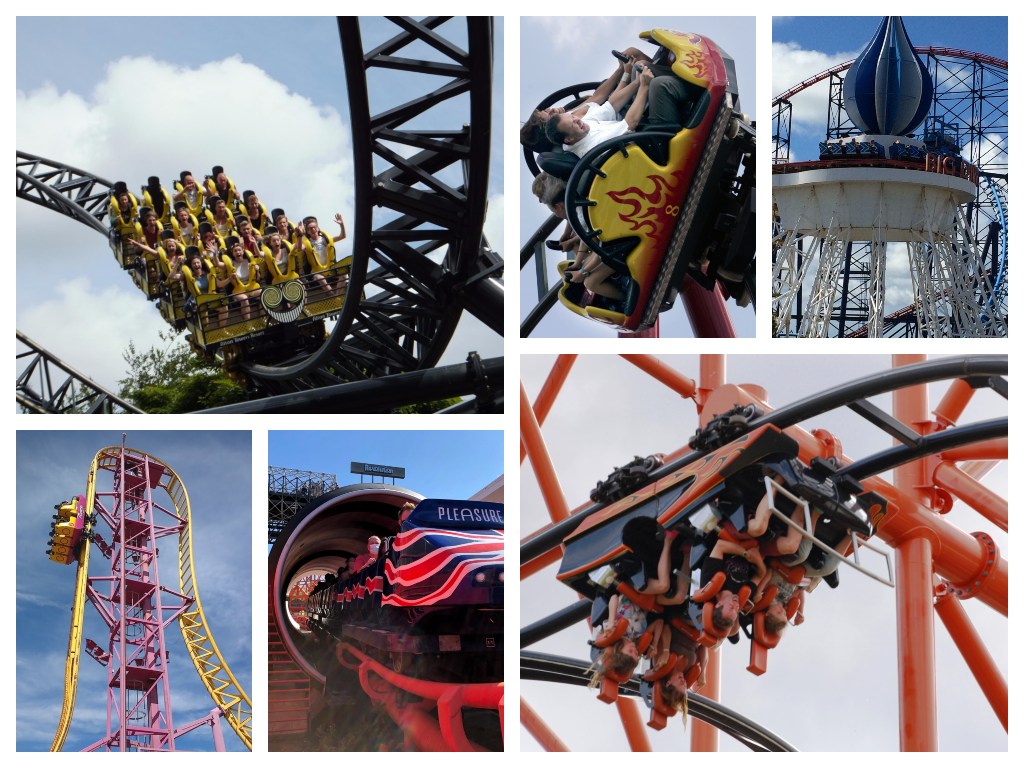
Providing riders with great thrills and memories to enjoy, roller coasters can be found around the world. In this post we answer the most frequently asked questions in regard to Roller Coasters.
Why do we love Roller Coasters?
Our love of roller coasters stems from our thirst for adrenaline, the desire to travel at high speeds in what appears to be an uncontrolled manner. Roller Coasters look like simple machines designed for your enjoyment but take a closer look and there’s much more to them than what you initially think.
What is a Roller Coaster?
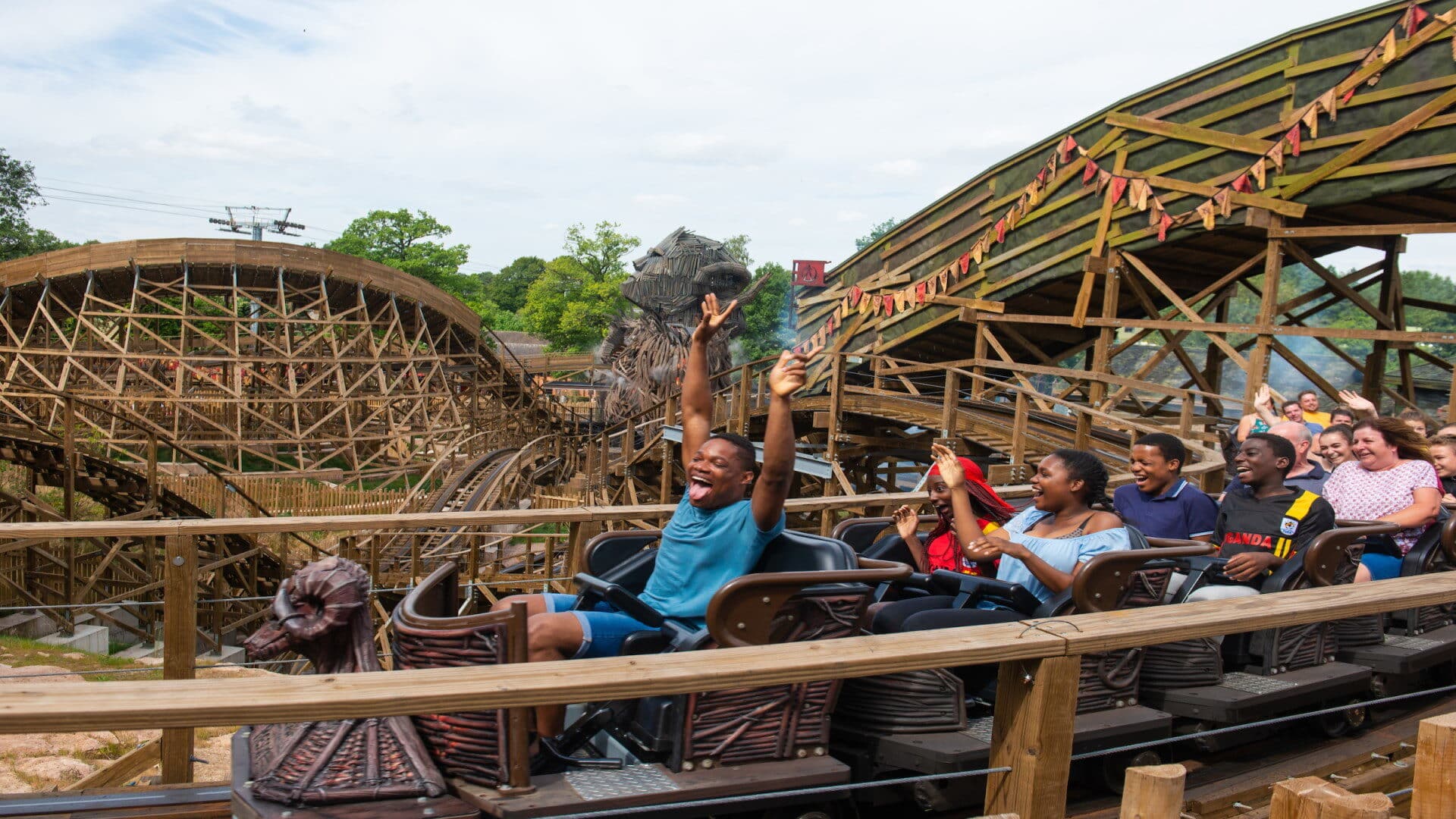
A roller coaster is a type of amusement ride that employs a form of elevated railroad track designed with tight turns, steep slopes, and sometimes inversions. Roller Coasters consist of two key components, the track and the train, the train full of passengers navigates the track which remains static. Roller coasters vary in size from small models aimed at young children through to thrilling rides reaching high speeds and immense heights.
Who Invented Roller Coasters?
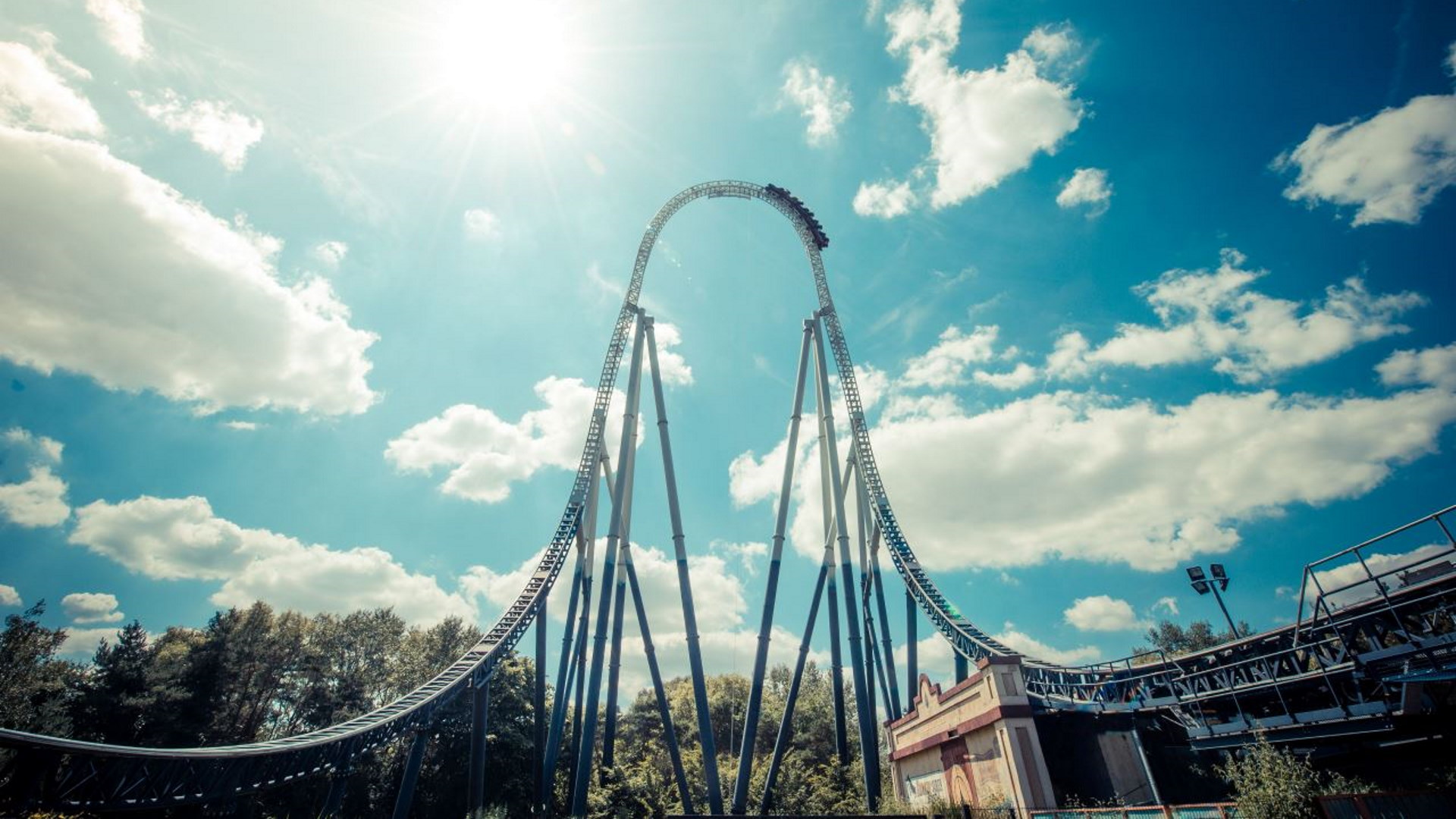
Roller coasters originated in 18th-century Russia where they constructed large ice slides. Early technology featured sledges or wheeled carts that were sent down hills of snow reinforced by wooden supports. The technology evolved in the 19th century to feature railroad track using wheeled cars that were securely locked to the track. Newer innovations emerged in the early 20th century with side friction and underfriction technologies to allow for greater speeds and sharper turns. By the mid-to-late 20th century, these elements intensified with the introduction of steel roller coaster designs and the ability for them to invert riders.
What are the Main Types of Roller Coaster?
Currently, there are three major types of roller coasters, distinguished mainly by their track structure, wooden, steel and hybrid. There are lots of examples of both wooden and steel roller coasters in the UK but no hybrids at the time of writing.

How are Roller Coasters Propelled?
There are a number of different methods used to propel a roller coaster train. Launch Mechanisms range from historic methods such as Weight Drop and Flywheel to the Modern Day Powered Launch, using hydraulics, pneumatics or electromagnets. Chain Lift Hills are one of the most common forms of propulsion found on roller coasters. The chain lift hill transports the roller coaster train to an elevated point or peak in the track. Upon reaching the peak, the train is then propelled by gravity coasting through the circuit using its own momentum.
What is the Best Roller Coaster in the UK?
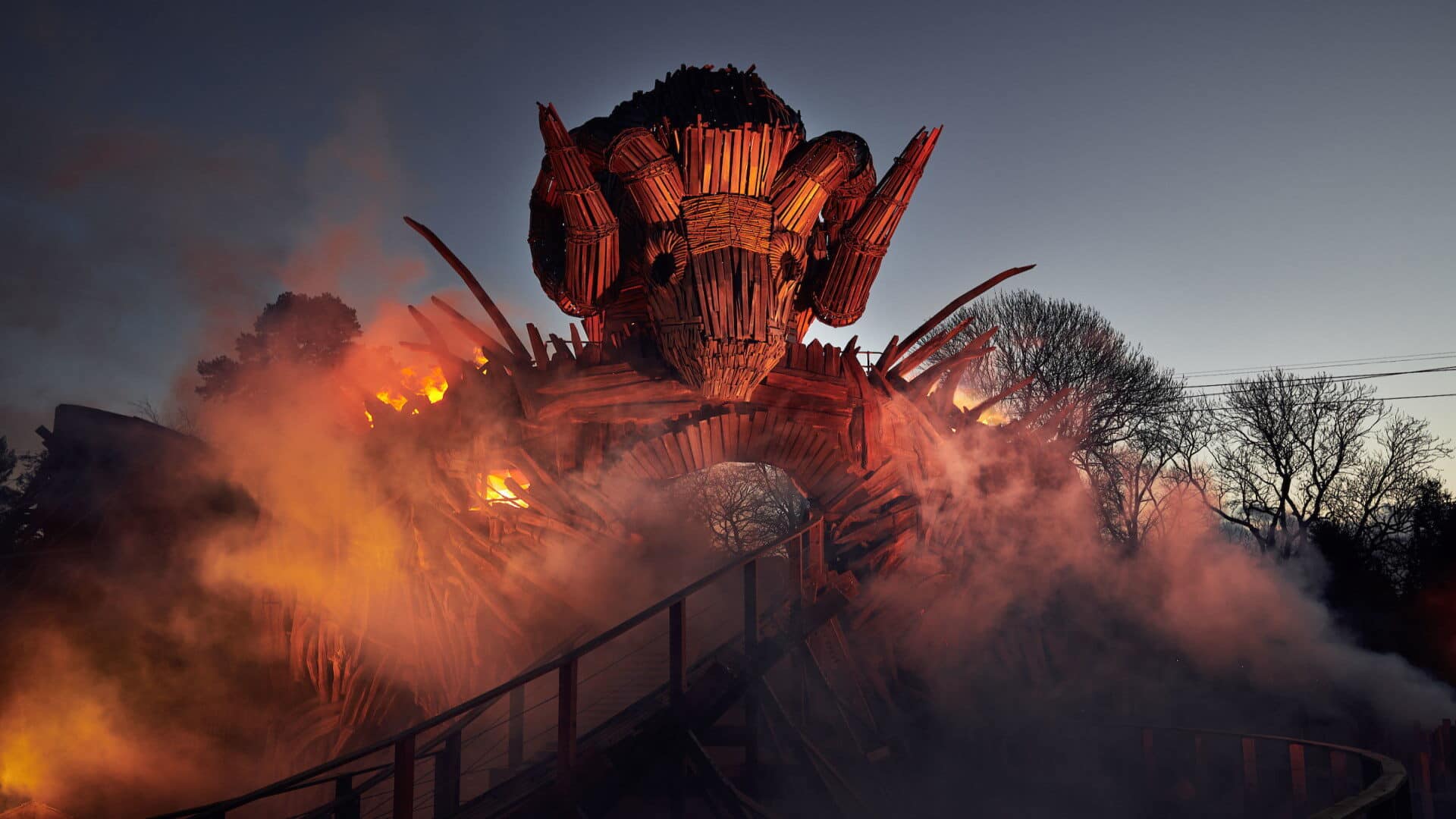
This could be debated for a very long time, at this present time it really is a battle between two of the countries newest rides ICON and Wicker Man. The winner can be determined based on whether you prefer wooden or steel roller coasters with ICON at Blackpool Pleasure Beach constructed from steel and Wicker Man at Alton Towers Resort constructed of wood. Some would argue that Nemesis at Alton Towers still holds the crown of best roller coaster in the UK and despite its age is still highly regarded throughout the world.
What is the Best Seat on a Roller Coaster?
The best seat on a coaster is a matter of personal taste but the majority of enthusiasts will go for the back seat as this is where you really get the greatest feeling of weightlessness. There are some rides where you may want the best view of the action, and in these cases, the front seats are the obvious choice. I love sitting in the front seats on Suspended Looping Rollercoasters like Kumaili at Flamingo Land Resort where there is nothing in front of you. The middle seats on a roller coaster provide the weakest ride, but no matter where you sit you will always have a great time.

How Much Does it Cost to Build a Roller Coaster?
When it comes to modern-day roller coasters if you want something thrilling and exciting then you won’t get much change out of £20m. Recent examples include The Smiler at Alton Towers which cost £18m. ICON cost £16.25m and Wicker Man had a price tag of £16m. It is not just the ride that costs money large amounts are also spent on the ride theming, special effects and marketing.
How Many Different Roller Coaster Elements are they?
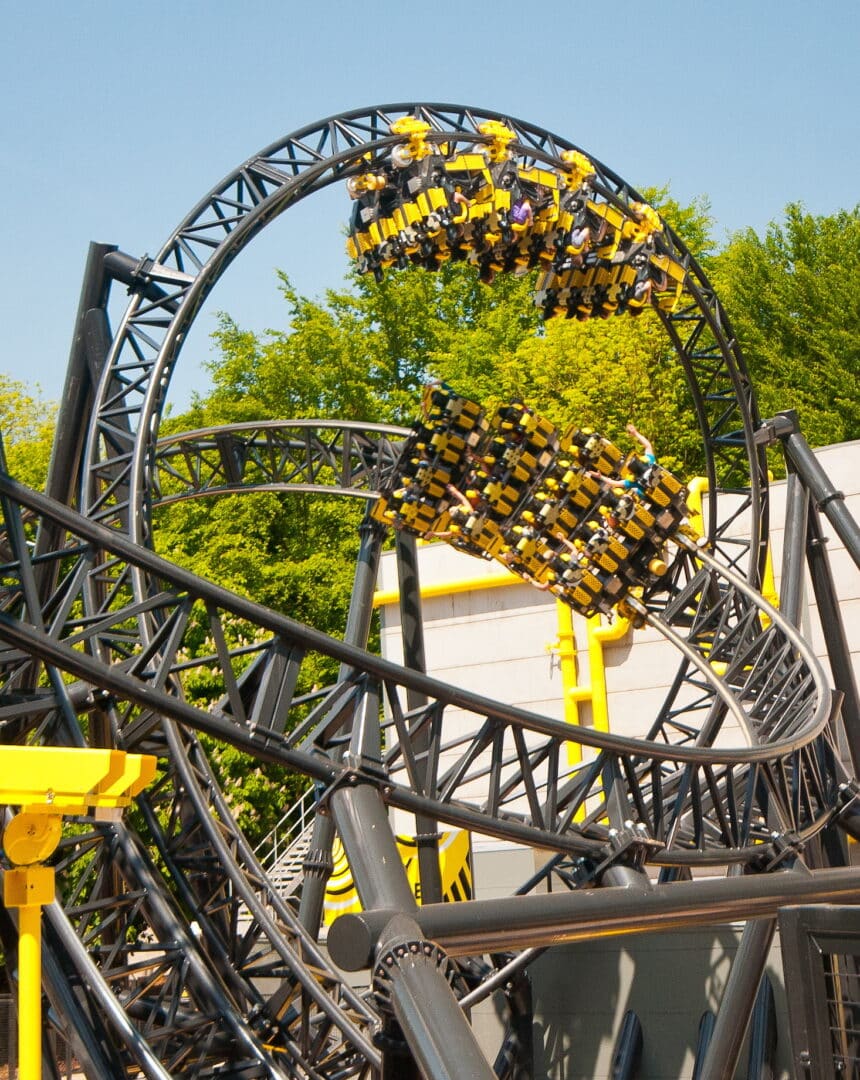
There are lots of different elements which can be found on a roller coaster. When these elements are combined they can really add to the rides thrill factor. Example elements include Corkscrews, headchoppers, inversons and top hats.
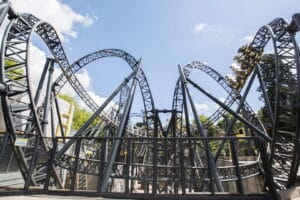
As the image below demonstrates The Swarm at Thrope Park Resort features a fantastic Keyhole element.

How do Roller Coasters Brakes Work?
The majority of roller coasters do not have any form of braking on the train itself and use braking systems integrated with the roller coaster track to control the trains speed. Various types of braking systems exist with new systems been developed thanks to technological advancements in design. Braking Systems may be located anywhere along a roller coasters circuit and are sometimes hidden from view.
Where should I go to ride Roller Coasters in the UK?
If you are wanting to ride roller coasters in the UK then the best places to visit are Thorpe Park in Surrey, Blackpool Pleasure Beach in Lancashire and Alton Towers Resort in Staffordshire. You will also find some fantastic roller coasters at many other UK Theme Parks. Click Here for the full list.

What is the Fastest Roller Coaster in the UK?
Stealth at Thorpe Park is one of Europe’s fastest rollercoasters. The ride has the fastest acceleration of any coaster in the UK with riders being propelled from 0-80mph to 205ft in under 2 seconds. The experience has the equivalent brake horsepower as two Formula 1 cars. Click Here to view the Top 10 Fastest Roller Coasters.

What is the Tallest Roller Coaster in the UK?
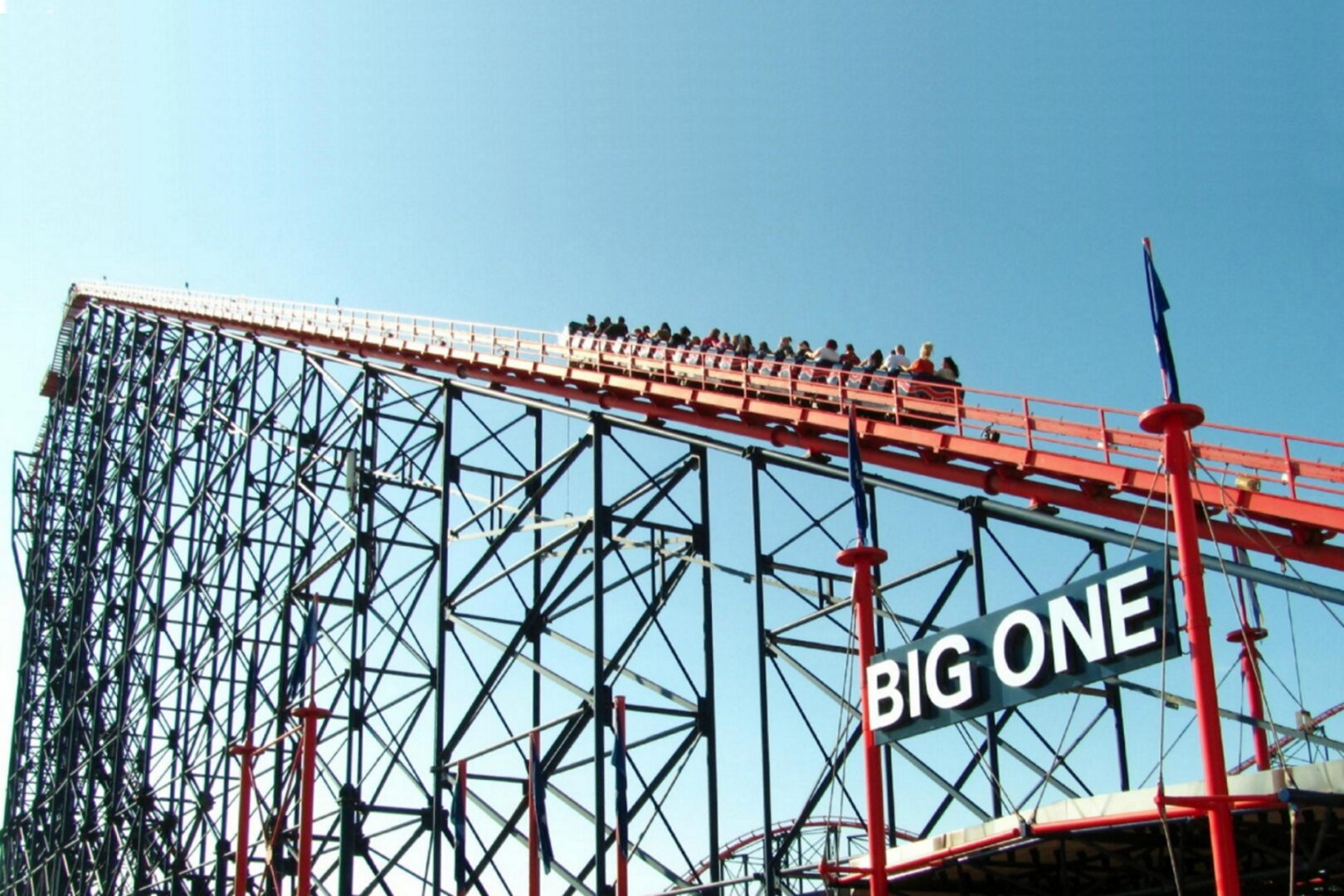
When The Big One at Blackpool Pleasure Beach opened to the public on 28 May 1994, it held the record of the tallest roller coaster in the world. It held this record until July 1996, when Fujiyama opened at Fuji-Q Highland in Japan. At a height of 213ft (65m), The Big One remains the tallest roller coaster in the UK. To really experience the height of The Big One you can also take an escorted climb to the 235ft summit of the lift hill. Click Here to view the UK’s Top 10 Tallest Roller Coasters.
What is the Longest Roller Coaster in the UK?
At a length of 7442ft (2268m), The Ultimate at Lightwater Valley Theme Park was the longest roller coaster in the world, when it first opened in 1991. It held this record until 1999 and still holds the title of the Longest Roller Coaster in the UK and Europe. Click Here to view the UK’s Top 10 Longest Roller Coasters.
Roller Coaster Quiz
Think you know your roller coasters?
Test your knowledge with our Roller Coaster Quiz and see how many UK Roller Coasters you can name.
If you find that too easy, we also have an extreme version of the roller coaster quiz too.
Attractions Near Me Offers
View More Discount Days Out at Attractions Near Me
Also, like our Facebook page for notification of any new offers Facebook.com/AttractionsNearMe

Author: Dan
I am passionate about Theme Parks and Attractions. I love riding roller coasters and thrill rides. With two young boys I understand how expensive family days out can be and this was one of the main driving forces behind Attractions Near me. My aim is to help you and your friends enjoy some great days out without costing the earth. Thanks for reading and have a great time - Regards Dan